

The most independent safari isn’t always the one that gives you the richest sense of discovery. When weighing guided safari versus self drive Tanzania, consider how much responsibility you want to carry alongside the freedom to explore. Self-drive gives you control over your pace, while a guided journey brings local knowledge and wildlife interpretation into each day.
You may wonder whether a guided itinerary will feel too structured, or whether driving unfamiliar roads and planning each stop could take your attention away from the landscape. This comparison explains what each style involves, from navigation and daily planning to flexibility and wildlife viewing. It can help you decide whether you’d enjoy managing the drive yourself or prefer experienced local trackers to add insight to guided days. By the end, you’ll have a clearer sense of which approach suits your driving confidence, preferred pace and priorities.
Key Takeaways
- Compare who handles driving, navigation and daily planning before deciding which safari style suits you.
- Consider how local interpretation can enrich wildlife viewing, while self-drive gives you more control over your pace.
- Use the guided safari versus self drive Tanzania comparison to weigh independence, practical effort, wildlife insight and cost, not just price.
- Answer five questions about your driving confidence, available time and preferred level of support to narrow your choice.
- See how a guided safari with experienced local trackers can align your journey with your interests and wildlife priorities.
Guided Safari vs Self-Drive in Tanzania: What Actually Changes?
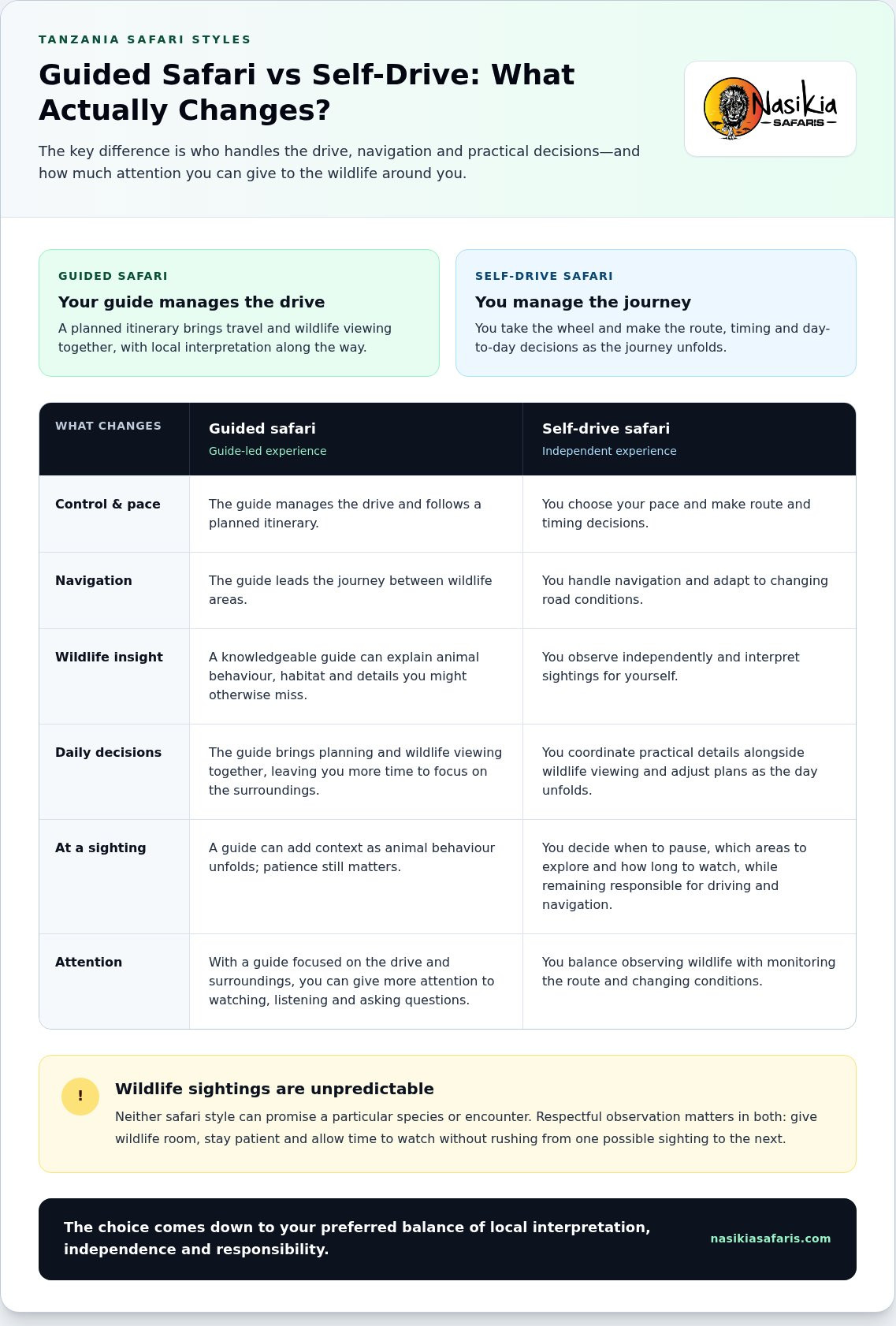
The main difference is who takes responsibility for the drive and the day’s practical decisions. On a guided safari, a guide drives and helps shape the wildlife experience. On a self-drive safari, you take the wheel and manage the route, timing and decisions as the day unfolds.
In Tanzania, a guided safari puts driving and wildlife interpretation in a guide’s hands, while a self-drive safari gives you control of the vehicle and responsibility for planning and navigating the journey. That difference affects more than who sits behind the wheel. It also determines how much attention you can give to the landscape and who handles practical choices along the way.
| What changes | Guided safari | Self-drive safari |
|---|---|---|
| Control | Your guide manages the drive, following a planned itinerary. | You choose your pace and make route and timing decisions. |
| Navigation | The guide leads the journey between wildlife areas. | You handle navigation and adapt to changing road conditions. |
| Wildlife interpretation | A guide can share field knowledge and explain animal behaviour. | You observe independently and interpret sightings for yourself. |
| Daily decisions | The guide brings planning and wildlife viewing together. | You coordinate practical details as well as wildlife viewing. |
What does a guided Tanzania safari include as an experience?
A knowledgeable guide does more than drive. Drawing on local field experience, they can point out signs you might otherwise miss, explain how animals use their habitat and add context as a sighting develops. That knowledge can turn a brief glimpse into a fuller understanding of the surrounding landscape.
A guided itinerary also brings travel and wildlife viewing together in a considered plan, leaving you more time to focus on what’s outside the vehicle. The details vary by itinerary, but guiding is central to the experience. In Tanzania’s national parks, the Tanzania National Parks Authority (TANAPA) provides an overview of the body responsible for their management.
What does self-drive ask you to manage?
Self-drive gives you more say over when to set out, how to pace the journey and which route to take. In return, you’re responsible for driving, navigation, timing and adjusting plans as the day unfolds. You’ll need to balance those tasks with watching for wildlife and taking in the scenery.
This approach can suit travelers who enjoy road journeys and feel comfortable making practical decisions in an unfamiliar setting. It doesn’t make self-drive the wrong choice, and it can’t guarantee a better encounter. Wildlife sightings are unpredictable either way. The difference is how much support or responsibility you want around the experience. That’s the heart of the guided safari versus self drive Tanzania decision.
How Guide Expertise and Independence Shape Wildlife Viewing
Wildlife viewing depends not only on where you travel, but also on what you notice and how you respond when the scene changes. A guide can offer context as animal behaviour unfolds, while independent travelers have more choice about where to pause and how long to watch. Patience matters in either case: sightings are unpredictable, and neither approach can promise a particular species or encounter.
How a local guide can deepen the wildlife experience
A guide’s field knowledge can help make sense of subtle details, such as an animal’s behaviour, its use of the habitat or a change in the scene that might otherwise go unnoticed. Rather than simply identifying what you see, a knowledgeable guide can add context and help you connect a sighting to the wider landscape.
On Nasikia Safaris’ guided wildlife journeys, experienced local trackers bring knowledge of prime wildlife-viewing regions. With a guide focused on the drive and the surroundings, you can give more attention to watching, listening and asking questions. Their insight can enrich the experience, but no sighting is guaranteed.
Where self-drive offers control, and where it adds responsibility
Self-drive lets you decide when to pause, which areas to explore and how long to spend at a sighting. If you enjoy making your own choices, that control can make the day feel personal. You can slow down when the landscape captures your attention, while remaining responsible for driving and navigation.
That division of attention matters. You’ll be observing wildlife while monitoring the route and changing conditions, then deciding where to go next. For trip-planning context, the Tanzania Tourist Board shares official information about travel and destinations. Whichever style you choose, leave time to watch without rushing from one possible sighting to the next.
Respectful observation is essential in both formats. Give wildlife room, stay patient and remember that animals move according to their own needs, not a visitor’s schedule. A guide can help interpret what’s happening; a self-drive traveler can choose how long to linger within their plans. Neither approach makes wildlife predictable.
So, the guided safari versus self drive Tanzania choice partly comes down to how you want to experience each sighting: with local interpretation and less focus on driving, or with the freedom and responsibility of making your own viewing decisions. If local insight is important to your trip, explore Nasikia’s guided Tanzania wildlife safaris.
Guided Safari or Self-Drive? Compare the Trade-Offs That Matter
The choice is not simply between freedom and support. It’s about which parts of the journey you want to manage yourself and where you’d value knowledgeable help. Use the comparison below to weigh how each style shapes a safari day, from planning and pace to the attention you can give the landscape.
| Consideration | Guided safari | Self-drive safari |
|---|---|---|
| Independence | You follow a planned journey while the experience unfolds with your guide’s expertise. | You have more control over route choices and how you spend time along the way. |
| Planning effort | Guiding brings travel logistics and wildlife viewing together, reducing the decisions you manage during the day. | You coordinate navigation, timing and route decisions, as well as the drive. |
| Wildlife interpretation | A guide can share local knowledge and help explain what you’re observing. | You make your own observations and respond to changing sightings. |
| Travel rhythm | The day follows the itinerary, with wildlife viewing shaped by the journey. | You set your pace, balancing time to explore with the practical demands of driving. |
| Cost | Compare the full itinerary with the support it provides. | Consider the costs you manage directly alongside the value you place on independence. |
Self-drive offers value through independence; a guided safari offers value through local expertise and supported travel. Neither is automatically the better choice. The right balance depends on whether you’d rather manage daily logistics or focus more on wildlife, scenery and interpretation.
Which safari style suits your experience and travel preferences?
Self-drive may appeal if you enjoy navigating independently, making decisions as you go and actively shaping each day. Guided travel may suit you if you value expert interpretation and prefer support with the practical flow of the journey. First-time safari visitors can choose either style. Your confidence, interests and preferred level of responsibility matter more than experience alone.
Consider the whole journey, not only the hours spent viewing wildlife. For general travel information as you prepare, consult the U.S. Department of State’s Tanzania Travel Advisory.
How do privacy, pace and planning effort compare?
With self-drive, you choose when to pause and how to shape your route, which can make the journey feel personal and private. That control comes with the need to pay attention to driving, navigation and changing conditions. A guided safari follows a planned structure, but gives you more freedom to watch the landscape and wildlife instead of managing each practical detail.
For the guided safari versus self drive Tanzania decision, ask what you’d rather be doing between sightings: making route choices or taking in the surroundings with a guide’s insight. This is a useful way to assess value, especially on a first visit when both the landscape and the practical demands may be unfamiliar.
Use These Questions to Choose Your Tanzania Safari Style
Picture not only the wildlife you hope to see, but also how you want each day to feel. Work through these five questions to decide whether you’d enjoy managing an independent drive or prefer a guided journey shaped around wildlife, local insight and practical support.
- How confident are you driving in an unfamiliar setting? If route-finding and adapting to changing conditions sound enjoyable, self-drive may suit you. If you’d rather leave the driving to a guide, consider a guided safari.
- How much time do you have? With limited days, consider whether you want to spend time making travel decisions or focusing on the experience. Guided travel can reduce the logistics you manage personally.
- What interests you most about wildlife? If you value local interpretation of animal behaviour and habitats, a guide can add context. If you prefer to make your own observations, independent travel may feel more rewarding.
- Is the Great Migration a priority? If it is, consider how route planning and seasonal context shape your trip. Migration-route and month-by-month resources can help you understand seasonal movement and timing.
- Would you rather manage navigation or concentrate on wildlife and scenery? Your answer points to the level of responsibility and support you’re likely to enjoy during the journey.
When is a guided safari likely to feel like the better fit?
A guided safari may suit travelers who value local insight, supported logistics and a carefully shaped itinerary, especially if time is limited and they want fewer decisions to manage along the way. For migration-focused trips, experienced local trackers bring knowledge of prime wildlife-viewing regions. Their expertise can enrich the experience, but wildlife remains unpredictable and no particular sighting is assured.
When might self-drive better match your travel style?
Self-drive may feel right if you enjoy independent road travel and are comfortable taking responsibility for route choices and daily logistics. Build your plans around realistic driving time, navigation and intended stops, rather than assuming every day will unfold exactly as mapped. Before travelling, review current official guidance for your route and destinations.
Your answers don’t have to point in only one direction. A first-time visitor may feel comfortable driving yet still prefer a guide’s wildlife interpretation, while an experienced independent traveler may value the freedom to set a personal pace. The best match is the format that makes practical demands manageable and leaves room for the experience you came to Tanzania to enjoy.
If local expertise and a thoughtfully planned wildlife journey appeal to you, explore a guided Tanzania safari with Nasikia.
Experience Tanzania with a Guided Safari Tailored to You
Once you’ve weighed independence against a guide’s support, decide what you want your days in Tanzania to hold. A guided itinerary can be shaped around your wildlife interests, preferred pace and comfort priorities. Experienced local trackers bring knowledge of prime wildlife-viewing regions. The aim is not to script every moment, but to give the journey a thoughtful direction based on what matters to you.
What a thoughtfully planned guided safari can make easier
With a guide handling the drive, you can pay more attention to the wide horizons, details in the landscape and wildlife around you. Local interpretation can add meaning to an encounter, providing context for animal behaviour and habitat as events unfold. Sightings remain unpredictable, but knowledgeable guidance can help you appreciate what you do see without focusing on the tasks of getting from place to place.
Nasikia Safaris’ guided wildlife journeys draw on experienced local trackers, whose knowledge supports wildlife viewing in prime regions. Each itinerary sets the journey’s practical details, so compare its rhythm and level of comfort with your preferences. A migration safari may suit you if following wildlife movement is a priority, while a luxury or honeymoon safari may better match the occasion and comfort you have in mind.
Turn your travel priorities into a guided itinerary
Start with the experiences you most want to include. Are you drawn to wildlife movement, unhurried time to take in the scenery or a particular style of accommodation? Also consider whether you prefer a full, varied day or a gentler pace. These priorities help you assess an itinerary as a complete journey, rather than choosing based on a single highlight.
Nasikia’s bespoke guided safaris provide a way to shape a journey around personal interests and preferred comfort. Identify what you hope to experience, then consider how the route, pace and accommodation align with those priorities. If migration is important to you, local tracking knowledge can add perspective, without making any particular encounter certain. The right fit should feel personal and considered, with practical arrangements supporting the experience you came to Tanzania to enjoy.
The decision between guided safari versus self drive Tanzania comes down to the level of responsibility and insight you want woven into your trip. If local knowledge, wildlife interpretation and a journey shaped around your priorities appeal to you, explore guided Tanzania safaris.
Shape the Tanzania Journey You’ll Remember
Your safari style can shape what stays with you: the satisfaction of finding your own way, or the ease of being guided through a landscape rich with life and meaning. As you make the guided safari versus self drive Tanzania decision, picture how you want to feel at the end of each day and where you’d like your attention to rest along the way.
For travelers drawn to expert-led wildlife experiences, Nasikia Safaris is a licensed Tanzanian tour operator offering guided journeys with experienced local trackers. Its bespoke options include migration, luxury and honeymoon safaris, giving travelers with different interests and travel styles several starting points. Consider which experience best reflects your priorities.
Let your curiosity lead, whether it draws you toward the freedom of self-drive or the depth of a locally guided journey. If guided travel feels right, explore guided Tanzania safaris and take the next step toward your safari.
Frequently Asked Questions
Is a guided safari better than self-drive in Tanzania?
Neither is universally better. The right fit depends on how you want to spend your attention and time. For the guided safari versus self drive Tanzania decision, picture a day with a route change or an unexpected wildlife sighting. Would you rather make the driving decisions yourself or focus on the moment with a guide? Also consider how much preparation you enjoy before departure. That can determine whether independence feels freeing or demanding.
Can you self-drive on a Tanzania safari?
Yes, self-drive is a travel style in Tanzania, though where you can go and the conditions for driving depend on your route and current access guidance. Before setting an itinerary, consult official information for the parks and areas you plan to visit. Allow time to understand the route rather than relying only on estimated drive times. You’ll also need to balance wildlife observation with attention to driving.
Is self-drive safari in Tanzania suitable for first-time visitors?
It can suit first-time visitors who are comfortable driving in an unfamiliar setting and enjoy organizing their own travel. Consider what you’ll be managing alongside the excitement of a first wildlife experience: route choices, timing and practical arrangements. If those tasks could distract from the reason you’re travelling, a guided format may feel more supportive. Your preferred way of learning and exploring matters as much as previous safari experience.
Does a guided safari guarantee better wildlife sightings?
No, a guide cannot guarantee a particular wildlife sighting. Animals move independently, and conditions can change throughout a trip. A guide offers knowledge and interpretation, not certainty. They can help you understand behaviour and context around an encounter. For a rewarding experience, stay curious about the landscape as a whole instead of judging the day only by whether a particular animal appears.
How much planning does a self-drive safari in Tanzania require?
Plan for more than the route itself. Consider how driving time fits into your days, where you intend to stop and how you’ll adjust if plans change. Check current official guidance for the destinations on your itinerary before travelling, since access information can vary by area. The preparation required depends on your route and how much detail you prefer to arrange in advance.
Can I choose a guided safari for a migration-focused trip?
Yes, migration interests can shape a guided safari itinerary, but herd movements and wildlife encounters are never certain. Start by learning how movement changes through the year, then consider which seasonal experience best matches your travel dates and priorities. Migration-route and timing guides can provide more planning context. Keep your expectations flexible, since nature does not follow a fixed visitor schedule.


