
The estimated fatality rate among people climbing Mount Kilimanjaro is about 0.03 per cent, but safe planning still matters on a mountain where altitude illness can become serious. For Kilimanjaro climb safety, look for an operator whose itinerary allows time to acclimatise, whose guides monitor climbers’ health, and whose team knows how to respond to illness and arrange a descent when needed.
It’s understandable to wonder whether every operator offers the same level of care. A 7-9-day climb allows more time for acclimatisation, while experienced guides, regular health checks and a clear evacuation plan help make sound decisions as conditions change. This article explains how those standards affect risk, what to look for in guide experience and medical response, and how reported fatalities fit into a practical assessment of safety, so you can choose your climb with a clearer view of the care behind the ascent.
Key Takeaways
- Choose an itinerary that allows time to acclimatise; a slower ascent gives your body more opportunity to adjust to thinner air.
- Prioritise a guide team that monitors climbers’ health, recognises altitude-illness warning signs and responds promptly when symptoms appear.
- Assess an operator’s safety standards beyond the summit plan, including staff training, equipment and how the team handles a descent or evacuation.
- Read fatality figures in context: altitude illness is a serious risk, so strong preparation and an appropriate response plan matter throughout the climb.
- Nasikia Safaris offers Climbing Kilimanjaro Expeditions for travellers ready to plan an ascent with these safety considerations in mind.
Mount Kilimanjaro Deaths: How Dangerous Is It?
Mount Kilimanjaro is a serious high-altitude climb, and acute mountain sickness is its single biggest killer. Kilimanjaro climb safety depends on acclimatisation, recognising symptoms early, pacing the ascent sensibly, and having a team prepared to respond.
Altitude Sickness and Acclimatisation
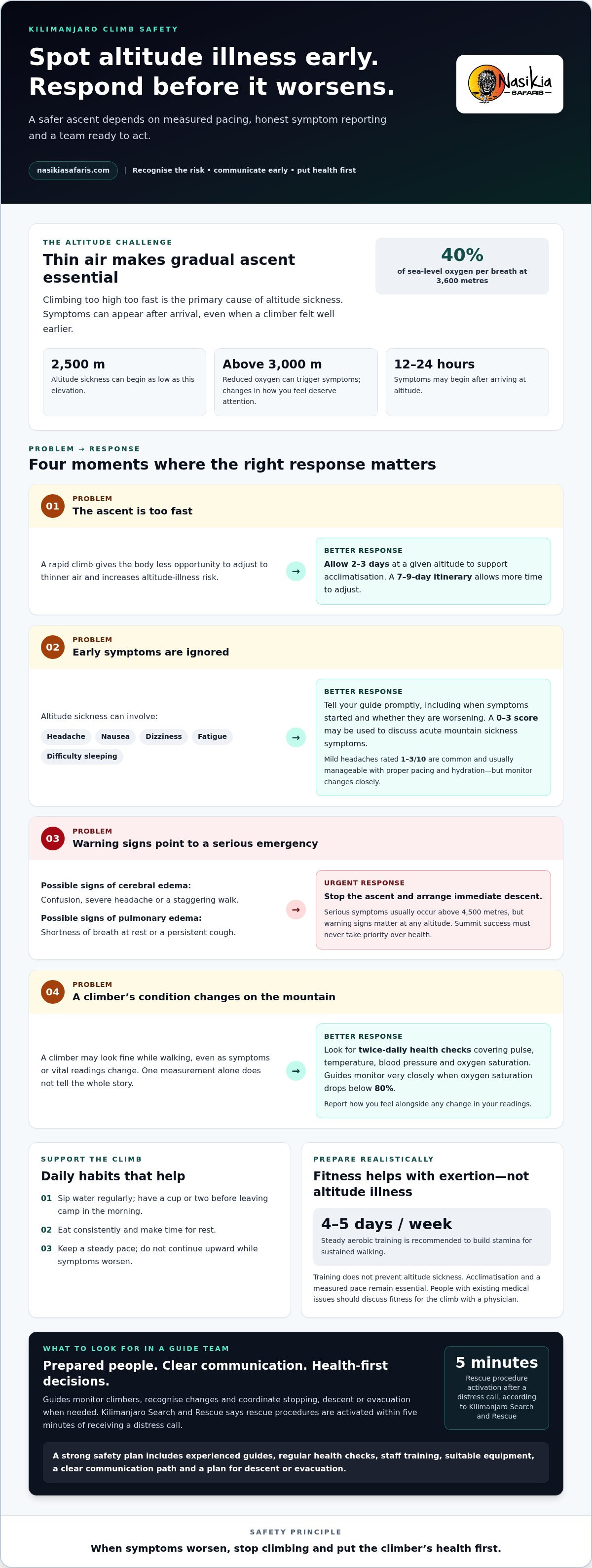
Altitude sickness occurs when the body struggles to adjust to thinner air during ascent. Above 3,000 metres, reduced oxygen can trigger symptoms; some people develop sickness as low as 2,500 metres. At 3,600 metres, the body receives about 40 per cent of sea-level oxygen with each breath. Climbing too high too fast is the primary cause, making gradual ascent central to risk reduction.
Allowing two to three days at a given altitude supports acclimatisation, while a 7-9-day itinerary allows more adjustment time. Altitude is also the main reason climbers fail to reach the summit. Symptoms can begin 12 to 24 hours after arriving at altitude, so feeling well during the day doesn’t rule out later problems.
Symptoms and Emergency Warning Signs
Altitude sickness symptoms can include headache, nausea, dizziness, fatigue, and difficulty sleeping. Mild headaches at 1-3/10 intensity are common and usually manageable with proper pacing and hydration, but symptoms need close attention. Tell your guide promptly if you feel unwell, and don’t continue upward while symptoms worsen.
Confusion, a severe headache, or a staggering walk can signal high-altitude cerebral edema and require immediate descent. Shortness of breath at rest and a persistent cough can indicate high-altitude pulmonary edema, also requiring immediate descent. Serious symptoms usually occur above 4,500 metres, but warning signs matter at any altitude.
Hydration, Nutrition, and Sleep at Altitude
Hydration, regular meals, and rest support your body during a demanding ascent. Sip water regularly rather than drinking a large amount at once, and have a cup or two before leaving camp in the morning. Eating consistently helps maintain energy for the day’s walk.
Sleep can become difficult at altitude, and poor rest may leave you more fatigued during the next day’s climb. Report new symptoms rather than assuming they come only from a restless night. Above 3,000 metres, changes in how you feel deserve attention because altitude sickness can develop after arrival.
Physical Preparation and Risk Reduction
Prepare with steady aerobic training 4-5 days per week, building the stamina needed for sustained walking. Training helps with exertion, but it doesn’t prevent altitude sickness; acclimatisation and a measured pace remain essential. People with existing medical issues should be especially cautious about high-elevation trekking and discuss their fitness for the climb with a physician.
January to March and August to September are described as the most pleasant dry-season periods. The United States Geological Survey notes that Kilimanjaro’s main rainy season lasts from March to May, with a weaker secondary rainfall peak around December. Conditions vary across the mountain, so pack suitable clothing and maintain a steady pace.
Kilimanjaro guide experience and medical response
On Kilimanjaro, climbers register each night when they reach a campsite, and authorities train guides in the causes and effects of altitude sickness. Following your guide’s directions and campsite procedures helps the team work safely together.
Guides monitor climbers’ health, recognise changes, and coordinate a response if someone becomes unwell. Kilimanjaro Search and Rescue says its rescue procedures are activated within five minutes of receiving a distress call.
Guide Experience and Emergency Protocols
Experienced guides use their mountain knowledge to recognise risks and respond before a climber’s condition worsens. Guides who assist more than 1,000 climbers annually encounter a range of altitude-related symptoms and can use that experience to assess changes during the ascent.
A response may involve stopping the climb, assessing the person, and arranging a descent or evacuation. Summit success must never take priority over a climber’s health. A clear communication path between the guide team and rescue support helps everyone respond promptly when an emergency develops.
Health Monitoring on the Mountain
Health monitoring means checking for changes in a climber’s condition, rather than relying only on how they look while walking. On Kilimanjaro, health checks are conducted twice daily and measure pulse, temperature, blood pressure, and oxygen saturation.
These readings give guides information to consider alongside symptoms and a climber’s ability to continue. Guides monitor climbers very closely when oxygen saturation drops below 80%. A single reading doesn’t replace a broader assessment, so report how you feel as well as any change in your measurements.
Communication with Guides
Tell your guide about symptoms as soon as they appear, even if they seem mild or embarrassing. A headache, nausea, unusual tiredness, or difficulty keeping pace can help the team assess how you’re responding to altitude.
Describe when the change began and whether it’s getting worse, then answer questions about your symptoms honestly. Guides may use a 0-3 score to rate acute mountain sickness symptoms, which provides a structured way to discuss how you feel. Sharing concerns early gives the team a better basis for deciding what happens next.
Climbing with Experienced Guides
Experienced guides support climbers across changing terrain, altitude, and group needs. Their role goes beyond setting the pace: they monitor the group, explain daily plans, and help climbers know when to report a concern or pause.
For a safer climb, consider whether the guide team describes its health checks and emergency response clearly. Ask how symptoms are assessed, who makes decisions about continuing, and how the team communicates during an evacuation. If you’re planning an ascent, explore Climbing Kilimanjaro Expeditions with these practical safety priorities in mind.
Are All Kilimanjaro Operators Safe to Climb With?
No. Operator standards and itineraries differ, so compare the practical details of each climb. Kilimanjaro climb safety depends in part on how well the itinerary, guide responsibilities, equipment, and emergency plans work together.
The cost of a guided climb depends on the route, itinerary length, park fees, staffing, and equipment, and is provided after a quote request. Compare what each quote includes rather than judging safety by price alone.
Choosing a Longer Itinerary
A longer itinerary gives your body more time to adjust as the route gains elevation. A 7-9-day climb is recommended to allow more acclimatisation, while longer itineraries typically have reported summit success rates of around 90-95 per cent.
This matters because travelling from near sea level to high altitude in a short time places greater demands on your body. An itinerary should show where the route gains elevation and allows time to rest, rather than simply promising a quick path to the summit.
Ask how the daily trekking plan balances distance, ascent, and recovery. A shorter climb may suit a tighter schedule, but less time can mean fewer opportunities to adjust. Choose an itinerary that allows adequate time for preparation and acclimatisation.
Selecting a Qualified Operator
A qualified operator can explain who leads the climb, how guides monitor the group, and what happens if someone becomes unwell. These details show whether safety is built into the itinerary or treated as an afterthought.
Look for clear explanations of guide training, health checks, communication, and emergency response. Ask how the team handles a climber who cannot continue and coordinates a descent or evacuation. The answers should describe practical steps, not rely only on general claims of experience.
Consider porter welfare and equipment, too. Poorly trained staff, overloaded porters, and inadequate equipment can create avoidable hazards. A responsible plan should explain how loads are managed and what equipment supports the group in changing mountain conditions.
Reputation and Operator Safety
A reputable operator provides consistent, specific information about the climb, from the route plan to safety procedures. A useful Kilimanjaro climb safety comparison looks at whether the schedule, guide responsibilities, equipment, and emergency arrangements are clearly described.
Reviews can add context, especially when they describe how guides responded to illness or changing conditions. Treat summit success claims as only one part of the picture: a safe decision to stop or descend can matter more than reaching the top.
Before booking, compare the full itinerary and note its practical details. The operator’s explanation of how it prepares climbers for high-altitude trekking can help you understand the support planned for your journey on Africa’s highest mountain.
Kilimanjaro climbing fatalities and evacuations
Evacuation is part of Kilimanjaro’s safety picture, not a substitute for careful climbing. Around 1,000 people are evacuated from the mountain every year, while deaths remain a separate, serious risk.
Annual Fatalities and Medical Evacuations
Estimates place annual fatalities among climbers at three to 10, with an estimated fatality rate of about 0.03 per cent. These figures describe different ways of expressing risk: the count is an estimate, while the rate relates deaths to the number of people climbing.
Around 1,000 people are evacuated from Mount Kilimanjaro every year. An evacuation may be needed when illness, injury, or a climber’s condition makes continuing unsafe. The figures show why a route plan should include a response beyond reaching the summit.
Climbing Risks and Evacuation
Evacuation means moving a climber away from danger when continuing the ascent or staying at altitude is unsafe. Altitude-related illness can worsen on Kilimanjaro, so confusion, a severe headache, or a staggering walk calls for immediate descent.
Shortness of breath at rest and a persistent cough are also emergency warning signs. Tell your guide as soon as symptoms appear; waiting to see if they pass can delay the response. Descending is a safety measure, not a failed climb.
Rescue coverage also has practical conditions. Kilimanjaro Search and Rescue says its procedures are activated within five minutes of receiving a distress call. Its rescue coverage requires travel insurance that covers trekking at high altitude up to 6,000 metres. Before departure, make sure your policy includes that level of trekking and understand how emergency assistance is contacted.
Park fees include a US$20 rescue fee for trekkers. This fee is distinct from travel insurance and should not be treated as a replacement for insurance coverage. The two serve different purposes: one is part of park fees, while insurance must cover the specific high-altitude trekking activity.
During the millennium celebrations, 33 trekkers required rescue on Kilimanjaro, and three people died. That historical example illustrates how rescue and fatality figures describe different outcomes, rather than a single measure of danger. A rescue can help a climber leave a hazardous situation; it does not remove the need to report symptoms early or follow a guide’s advice.
Weather, altitude, terrain, and a person’s condition can all affect how an evacuation unfolds on the mountain. Leave room in any safari or onward travel plans for an unexpected descent and recovery instead of assuming the climb will follow its planned schedule. Prioritise a team with a clear way to raise an alarm and coordinate a response.
Reported deaths on Mount Kilimanjaro
Reported deaths are one measure of risk on Mount Kilimanjaro, but available estimates don’t align exactly. Figures include three to 10 climbers dying annually, approximately 10 reported deaths every year, and a separate report of more than 10 deaths each year. These differences make a single precise annual count difficult to infer. Read each figure as an estimate, not a prediction of an individual climber’s risk.
One estimate puts the fatality rate among people climbing the mountain at about 0.03 per cent. The research figures also place annual deaths at three to 10 climbers, while other reports cite approximately 10 or more. Those statements aren’t interchangeable: a yearly count and a rate describe different things, and the rate depends on how many climbers are included in its calculation.
Altitude-related illness is central to understanding the danger. Acute mountain sickness is described as Kilimanjaro’s single biggest killer, and climbing too high too fast is its primary cause. At 3,600 metres, each breath provides about 40 per cent of the oxygen available at sea level. Symptoms can begin 12 to 24 hours after arrival at altitude, so a climber may feel well during an ascent and become unwell later.
Mount Kilimanjaro rises to 5,895 metres, where the body faces a substantial reduction in available oxygen. Confusion, a severe headache, or a staggering walk can indicate high-altitude cerebral edema. Shortness of breath at rest and a persistent cough can signal high-altitude pulmonary edema. These are emergency signs, not discomfort to push through for a summit attempt.
The historical account of the millennium celebrations offers another example: three people died on Kilimanjaro, while 33 trekkers required rescue. Those outcomes show why deaths and evacuations should be considered separately. An evacuation is a response to danger, while a death count records a tragic outcome. For climbers in Tanzania, reporting symptoms promptly and following a guide’s descent decision are practical ways to respond to risk.
Numbers alone can’t tell you whether a particular route or itinerary is suitable. Consider how the ascent allows time to adjust, how the team monitors climbers, and what happens if someone becomes seriously ill. Oxygen saturation can provide additional context when assessing how a climber is responding to altitude. Eating and resting support the effort, but they don’t remove altitude risk.
To plan an ascent with safety considerations in view, explore Kilimanjaro climbing options and compare the itinerary, monitoring approach, and response plan.
Nasikia Safaris: Climbing Kilimanjaro Expeditions
Nasikia Safaris offers guided Climbing Kilimanjaro Expeditions for travellers ready to turn careful safety planning into a mountain journey. As you plan, consider how the itinerary supports acclimatisation, how guides monitor climbers, and what happens if someone becomes unwell. These priorities can guide your discussion, from route choice to the pace of the ascent.
Bring questions about health monitoring, emergency procedures, and evacuation arrangements so you can make an informed decision about your expedition. To discuss a Kilimanjaro climb shaped around your travel plans, contact Nasikia Safaris or visit nasikiasafaris.com.
Plan Your Ascent with Care
Turn your safety priorities into practical planning questions. Consider what pace feels sustainable, how you want decisions handled if you feel unwell, and what information will help you feel prepared before setting out. Clear expectations make it easier to choose an expedition that fits your needs and approach the mountain confidently.
Kilimanjaro climb safety depends on thoughtful choices throughout the journey, including being candid about your health and taking guidance seriously. If you’re ready to discuss your plans, route preferences, and safety questions, Nasikia Safaris offers guided Climbing Kilimanjaro Expeditions to help you begin planning your ascent.
Contact Nasikia Safaris about Kilimanjaro safety, and take the next step toward a considered, rewarding climb.
Frequently Asked Questions
DO FIT PEOPLE GET ALTITUDE SICKNESS?
Yes. Physical fitness can help with the effort of trekking, but it doesn’t guarantee protection from altitude sickness. The body’s response depends on altitude and how quickly it ascends, not simply on strength or training. Even a fit climber should pace the ascent, report symptoms, and follow the guide’s advice. Anyone with existing medical issues should discuss high-altitude trekking with a physician before planning a climb.
WHAT IF YOU FEEL SICK ON KILIMANJARO?
Tell your guide promptly, describing your symptoms, when they began, and whether they’re worsening. Don’t keep climbing in silence to avoid delaying the group. A guide can assess your condition and decide whether to pause, descend, or seek further help. Confusion, a severe headache, staggering, shortness of breath at rest, or a persistent cough require urgent attention and descent.
How safe is climbing Mount Kilimanjaro?
Climbing Mount Kilimanjaro carries real risks, particularly from altitude, but planning and responsive guide support can help manage them. Safety depends on the ascent schedule, the climber’s health, symptom reporting, and the team’s decisions when conditions change. Fitness and preparation cannot remove every risk. Before departure, consider how your operator explains health monitoring, emergency communication, and what happens if you need to stop climbing.
What are the main risks and causes of death on Kilimanjaro?
Acute mountain sickness is identified as the mountain’s single biggest killer, and rapid ascent is a key risk factor. Other serious altitude-related emergencies include high-altitude cerebral edema and high-altitude pulmonary edema. Warning signs include confusion, a staggering walk, severe headache, breathlessness at rest, and persistent cough. These symptoms call for immediate attention and descent, not continued ascent toward the summit.
What are the symptoms and treatment of altitude sickness on Kilimanjaro?
Common symptoms include headache, nausea, dizziness, fatigue, and difficulty sleeping. Tell your guide when symptoms appear, and don’t continue ascending if they worsen. Confusion, a severe headache, staggering, breathlessness at rest, or a persistent cough are emergency warning signs requiring immediate descent. A physician can advise whether medication such as Diamox is appropriate. Consult them before taking it, since suitability depends on your health.
How do route choice and climb duration affect Kilimanjaro safety?
Route choice affects how quickly you gain altitude and how much time your body has to adjust. Most routes begin between 1,600 and 2,300 metres, while the Shira route starts at 3,600 metres, making starting elevation an important comparison. A longer itinerary can allow more acclimatisation. Compare daily elevation changes and overnight stops, not just route scenery or the advertised summit schedule.
What safety equipment and medical checks are required for a Kilimanjaro climb?
Medical checks on the mountain may include measuring pulse, temperature, blood pressure, and oxygen saturation. Ask how the guide team records and responds to changes, and what medical equipment it carries for assessment and emergencies. The information provided here doesn’t establish a universal equipment checklist or a specific legal requirement. Separately, climbers need travel insurance that covers high-altitude trekking up to 6,000 metres for Kilimanjaro Search and Rescue coverage.
What are Kilimanjaro National Park rules for guides, porters, and climbers?
Climbers must register each night when they arrive at a campsite and follow guide directions and campsite procedures. Authorities train guides in the causes and effects of altitude sickness.


