
Peak athleticism isn’t the goal of Kilimanjaro trek preparation. Arriving steadily trained, properly equipped and ready to follow your guide’s pace matters more. It’s natural to wonder how fit you need to be, what belongs in your duffel and which health steps deserve attention before departure. Altitude is the mountain’s greatest challenge, so preparation means building practical endurance and making thoughtful plans, not expecting training to guarantee a summit.
This checklist turns those questions into a realistic plan for your guided trek. You’ll find a staged approach to walking and fitness, essential gear and packing, health planning, and final details to review before departure. You’ll also see what to coordinate with your expedition team. Route planning, safety management, support teams and mountain camping logistics help organise the journey, while your own preparation gets you ready to take part. With clear priorities and enough time, you can set out more confident and informed.
Key Takeaways
- Make Kilimanjaro trek preparation manageable with a staged checklist instead of trying to do everything at once.
- Build trekking fitness gradually, moving from regular walks to longer outings and practice with a pack.
- Test your footwear, layers, rain protection, sleep gear and daypack before departure so there’s time to address any gaps.
- Discuss personal health, medication and vaccination questions with qualified professionals, and review travel insurance terms for trekking activities.
- Bring practical questions to expedition planning. Route planning, safety management and support logistics complement your own preparation.
Kilimanjaro Trek Preparation: Understand the Challenge and Start Your Checklist
The prospect of standing above the clouds is thrilling, and it’s just as natural to wonder whether you’re ready for several days of walking, changing conditions and unfamiliar altitude. Good Kilimanjaro trek preparation isn’t about chasing peak athleticism or predicting exactly how you’ll feel on the mountain. It means building practical habits, making informed plans and leaving time to address the details.
The trek involves repeated walking days over varied terrain, with nights spent at elevation. Fitness can help you meet the physical demands, but neither training nor careful planning can guarantee a summit. A realistic checklist keeps your attention on what you can prepare for, while leaving room to respond to the experience as it unfolds.
What makes a Kilimanjaro trek different from an ordinary hike?
A single day hike may test your stamina, but a multi-day trek asks you to walk again after each day’s effort, over changing ground and while carrying a daypack. Sleeping at elevation adds a challenge distinct from ordinary exertion. Altitude affects people differently, and fitness alone doesn’t predict how your body will respond. For background on the mountain’s geography, climate and routes, see the Mount Kilimanjaro Wikipedia page.
That’s why practising sustained walking is more useful than focusing only on speed. Get used to spending time on your feet and maintaining a steady effort. Treat the trek as a series of walking days, not a race or a one-day peak effort.
How to organise preparation around your departure date
Build your schedule around your current activity level, the time you have available and your chosen trek plans. Start early enough to make gradual progress, but keep the plan personal: there’s no single training timeline that suits every traveller. Reviewing route and expedition details can help you organise your preparation. See the Kilimanjaro climbing expeditions guide as you consider your plans.
Use these stages to turn the larger task into clear priorities:
- Early planning: Understand the trek’s route, duration and daily routine, then map out the time you have to prepare.
- Ongoing fitness: Establish a comfortable starting point and build walking into your routine, increasing duration gradually.
- Equipment checks: Review your footwear, clothing and other essential gear in good time, then practise with the items you plan to use.
- Health and travel planning: Set aside time for personal health questions, medication discussions and travel administration instead of leaving them until the final days.
- Before departure: Recheck your packing, documents and arrangements, and make sure you understand the guided expedition plan.
A guided expedition includes route planning, safety management, support teams and mountain camping logistics. These complement, but don’t replace, your own preparation. Treat your checklist as a working plan: adjust it as departure approaches and raise practical questions during expedition planning so you can begin the trek informed and ready for the journey ahead.
Build Trekking Fitness with a Practical Kilimanjaro Training Checklist
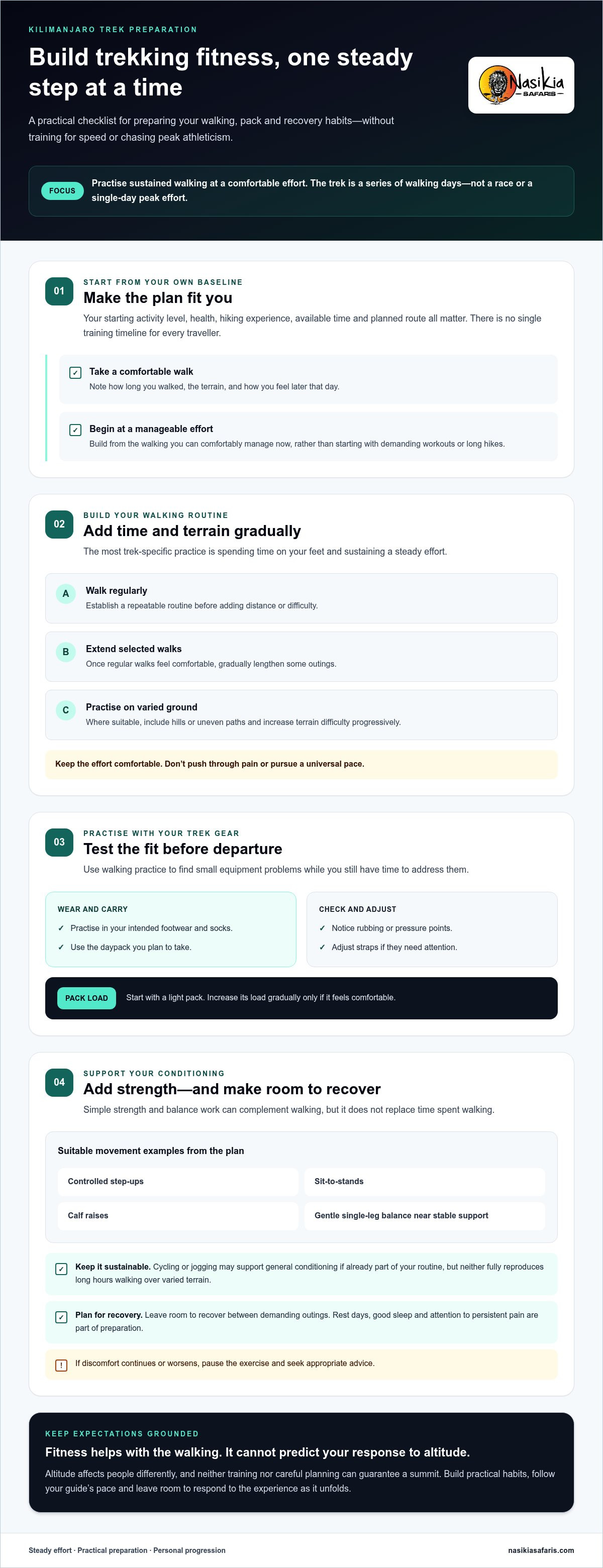
A useful training plan doesn’t need to begin with long hikes or demanding workouts. Start with the walking you can comfortably manage now, then build toward the sustained time on your feet that a multi-day trek involves. Your Kilimanjaro trek preparation should reflect your health, hiking experience, available time and planned route, rather than a rigid programme designed for someone else.
Use walking and hiking to practise for trek conditions
Begin with regular walks at a manageable effort, paying attention to how you feel during the outing and afterwards. Once that routine feels comfortable, extend some walks and, where suitable, choose hills or uneven paths. Add time and terrain progressively. Don’t push through pain or pursue a universal pace.
As your walks develop, practise in the footwear, socks and daypack you intend to take. Notice rubbing, pressure points or straps that need adjusting before the trek. Start with a light pack, then increase its load gradually if it feels comfortable. Leave room to recover between demanding outings, particularly after a longer walk or a session on hilly ground.
Add strength, endurance and recovery without overtraining
Walking is the most trek-specific preparation, while simple strength and balance exercises can complement it. Choose movements that suit your ability, such as controlled step-ups, sit-to-stands, calf raises and gentle single-leg balance practice near a stable support. These exercises let you rehearse everyday climbing and stepping motions, but they don’t replace time spent walking.
Cycling or jogging can support general conditioning if they’re already part of your routine, though neither fully reproduces long hours on foot over varied terrain. Keep training sustainable. Rest days, good sleep and attention to persistent pain are part of preparation, not signs that you’ve fallen behind. If an exercise causes discomfort that continues or worsens, pause and seek appropriate advice.
Use this progression as a flexible framework, adjusting each stage to your starting point and how you respond:
- Establish a baseline: Take a comfortable walk and note its duration, terrain and how you feel later that day.
- Walk regularly: Build a repeatable routine before adding distance or difficulty.
- Extend gradually: Lengthen selected walks or introduce hills and uneven surfaces when your current routine feels manageable.
- Practise with your pack: Test your intended footwear and daypack, adding load in small steps rather than all at once.
- Balance effort with recovery: Make space for rest, and adapt the plan if fatigue or discomfort starts to accumulate.
There’s no single schedule that suits every climber, and training can’t predict how you’ll respond to altitude or guarantee a summit. If you have a health condition, are concerned about starting exercise or have questions about an appropriate level of effort, speak with a qualified clinician before changing your routine. Nasikia Safaris provides guided Kilimanjaro expeditions, with route planning and expedition support alongside your own training and preparation. Learn more about Nasikia Safaris’ guided Kilimanjaro expeditions.
Check Your Kilimanjaro Gear Before You Pack
Reliable gear should feel familiar before your trek begins, not become a source of distraction on the mountain. A clear packing system helps you spot missing items, test comfort during training and avoid bringing things your itinerary doesn’t call for. For Kilimanjaro trek preparation, group equipment by purpose and use your expedition-specific packing guidance to distinguish what you’ll carry from what the team provides or requires.
Fit and test footwear, socks and your daypack
Wear your trekking footwear on progressively longer practice walks, checking that it feels secure and comfortable as your feet move. Test your trekking socks, too, and try any blister-prevention approach during training rather than relying on it for the first time on the trek. Adjust your daypack so it sits comfortably, then practise carrying the personal items you expect to have with you while walking.
Prepare clothing and personal essentials for changing conditions
Choose adaptable clothing you can layer, along with rain protection and accessories suited to your itinerary. Try each layer while walking and while resting, since comfort can differ when you’re moving or still. Keep personal essentials separate from expedition-team equipment, and use your route-specific packing guidance to avoid duplicating items or overlooking something required.
The table below is a practical starting point, not a substitute for the packing list for your particular expedition. Test each item before departure and note anything that needs repair, replacement or adjustment.
| Item | Purpose | Pre-departure check |
|---|---|---|
| Trekking footwear and socks | Support comfortable walking over repeated days | Wear them on longer practice walks and check for rubbing or pressure |
| Layered clothing | Let you adjust what you wear as conditions and activity change | Try combinations while walking and resting; check fit and ease of movement |
| Rain protection | Provide an outer layer for wet conditions | Check its condition and practise putting it on over your other layers |
| Sleep system | Support rest during overnight stops | Review the itinerary’s guidance and check the items you’re responsible for |
| Daypack | Carry personal items needed during walking days | Adjust the fit and practise carrying your expected load |
| Personal essentials | Keep individual items organised and accessible | Check your own list against the expedition packing guidance |
Use these checks to assess comfort and function, rather than chasing a particular brand or packing a long list of extras. If footwear feels uncomfortable on practice walks, resolve that before departure. If a layer restricts movement or is difficult to manage, try another arrangement. Small adjustments made at home are easier than discovering a problem during a trekking day.
Before packing, compare your personal kit with the items supplied or required for your itinerary. Guided expeditions include mountain camping logistics, and your itinerary’s packing guidance helps clarify which equipment is yours to bring. Keep the final list accessible as you pack, and set aside anything that still needs testing or adjustment.
Complete Your Health, Hydration and Departure Readiness Checks
With training and equipment taking shape, turn to the personal and administrative details that are easier to settle before departure than at the last minute. Thoughtful Kilimanjaro trek preparation includes professional advice tailored to your health, a clear understanding of your travel documents and insurance terms, and simple routines you’ve already tried on longer walks.
Handle health questions and travel documents early
Arrange time with a qualified healthcare professional to discuss your health, any medication you take and vaccination questions for your itinerary. Share your planned trek and travel dates so the advice can be relevant to your circumstances. Don’t start, stop or change medication based on general trekking advice. For entry and document requirements, consult current official Tanzanian sources and check that your passport and other travel documents meet the rules that apply to you.
Read your travel insurance policy wording rather than relying on a general description of coverage. Look specifically for terms addressing trekking at altitude, medical care and evacuation, along with any exclusions or conditions that could affect your plans. As of October 2026, Tanzania’s government inbound travel insurance for foreign visitors costs $44. Check current official guidance and your policy details before departure, since requirements and personal coverage are separate considerations.
Practise simple routines for food, water and rest
Longer practice walks give you a chance to see how familiar snacks and your usual meal timing work while you’re active. Try the personal hydration setup you plan to carry, and practise accessing and using it without interrupting your walk for long. There’s no universal fluid target that suits every person or condition, so avoid forcing a fixed amount based on generic advice. Follow individual guidance from your clinician and expedition team.
Rest is part of readiness, too. In the lead-up to departure, keep a steady sleep routine where practical and avoid treating last-minute training or packing as a substitute for recovery. If a health concern arises, seek qualified advice rather than assuming it will resolve on the mountain.
Set aside a final review session and work through this short list:
- Documents: Check passport details, entry requirements and the travel documents relevant to your itinerary against current official information.
- Health: Keep personal medical advice and medication plans organised, and note any instructions you’ll need to follow.
- Insurance: Save access to your policy and review the wording for altitude trekking and related conditions.
- Packing: Compare your packed personal items with the itinerary-specific list, separating them from equipment arranged by the expedition team.
- Daily routine: Prepare familiar snacks and your hydration setup, and decide where you’ll keep them.
On a guided expedition, route planning, safety management and support teams help organise the mountain journey, while these personal checks remain yours to complete. Read about guided Kilimanjaro expeditions as you bring your preparation and expedition plans together.
Bring Your Preparation Together with a Guided Kilimanjaro Expedition
Your preparation has several connected parts: progressive walking practice, tested gear, health questions addressed with qualified professionals, and travel details reviewed before departure. Bring them together by setting a personal timeline that fits your expedition dates. This makes it easier to see what still needs attention without turning every piece of advice into another task.
Coordinate personal preparation with expedition planning
Use your planned itinerary as the reference point for training and packing. As departure approaches, compare your progress and equipment checks with the expedition schedule. Leave time to resolve practical gaps instead of postponing them until the final days. Nasikia Safaris’ guided Kilimanjaro expeditions include route planning and mountain camping logistics, helping organise the journey alongside the training and personal preparation you undertake yourself.
A simple final review can keep the two sides of preparation clear:
- Your preparation: Continue a sustainable walking routine, practise with personal gear, and follow up on health, medication and vaccination questions with qualified professionals.
- Your travel readiness: Review documents, insurance terms and your packing list against current official information and the itinerary.
- Expedition planning: Keep your preparation aligned with the guided plan, including the route and mountain logistics arranged for the climb.
This distinction helps you focus on what you can manage while understanding where the expedition team’s planning fits. Route choices, safety management and support-team operations are part of the guided expedition, not extra tasks to solve through personal training. A guided climb brings practical planning and support to the journey, but it doesn’t replace your own readiness or determine how your body will respond on the mountain.
Make the next step feel clear and unhurried
Once you have a personal checklist and a sense of timing, expedition planning becomes a natural continuation. Consider how the itinerary connects with your available preparation time, the gear you’ll bring and the questions you’ve gathered. You don’t need to have every detail mastered before taking that step. A clear overview can help you understand how your personal plans fit with the guided journey.
Review Nasikia Safaris’ guided Kilimanjaro expeditions as you bring your plans into focus. Thoughtful Kilimanjaro trek preparation can help you arrive more organised and ready to take on the experience, but no checklist or guided arrangement can promise a summit. The aim is a considered start, supported by your own preparation and experienced expedition planning.
Take the Next Step Toward the Mountain
Turn your preparation into a plan that fits the expedition you hope to take. As you consider dates and itinerary, think about the time you’ll need to prepare and the questions you want answered along the way. Kilimanjaro trek preparation isn’t about controlling every part of the climb; it’s about arriving informed, equipped and ready to adapt.
A guided expedition brings personal effort together with practical planning. Nasikia Safaris organises guided Kilimanjaro treks with route planning, safety management, full support teams and mountain camping logistics, creating a framework for your own training and readiness. These elements support the journey, but no preparation can promise a particular summit outcome.
When you’re ready to plan your climb, explore Nasikia Safaris’ guided Kilimanjaro expeditions. Take the climb one thoughtful step at a time, and let your preparation carry you toward the mountain with confidence.
Frequently Asked Questions
How far in advance should I start preparing for a Kilimanjaro trek?
Start planning as soon as you have a likely departure period, then set a training schedule that fits your current fitness and commitments. There’s no single preparation window for everyone. For popular routes and peak periods, the research guidance recommends booking six to eight months ahead; booking time and fitness-building time are separate considerations. Earlier planning also leaves room to organise health appointments, travel documents and equipment without a last-minute rush.
Can a beginner prepare for a Kilimanjaro trek?
Yes, a beginner can prepare by approaching the trek realistically and building experience gradually. You don’t need to be an elite athlete, but a guided climb involves sustained physical effort and high altitude. Begin with activity you can manage and increase it thoughtfully rather than copying an experienced hiker’s routine. A qualified guide and authorised trekking company are required for Kilimanjaro climbs.
Is gym training enough to prepare for Kilimanjaro?
No, gym training alone doesn’t fully reproduce the demands of walking outdoors for extended periods over varied ground. Strength or cardio sessions can contribute to general conditioning, but include actual walks so you can learn how your body responds to time on your feet. A gym can be useful when weather or access makes outdoor training difficult, but treat it as a complement to walking practice, not a complete substitute.
Do I need previous mountain hiking experience to trek Kilimanjaro?
No previous mountain hike is essential, and technical climbing skills aren’t generally required for the trekking routes. Still, a first multi-day trek can feel unfamiliar, so practise longer outdoor walks and get comfortable managing your belongings along the way. Kilimanjaro’s altitude is a separate challenge from trail difficulty, and past hiking experience can’t predict how you’ll respond to it. Climbs must be guided by a licensed guide through an authorised trekking company.
What should I practise before a Kilimanjaro trek?
Practise the small routines that make a long day outdoors more manageable: organising your daypack, adjusting layers as you warm up or cool down, and accessing personal items without unpacking everything. On a suitable walk, try the snacks and hydration setup you expect to use. Notice what feels comfortable and what causes inconvenience. These observations can help you refine your routine before departure, without relying on unfamiliar gear or habits on the mountain.
Should I get medical advice before trekking at altitude?
Yes, speak with a qualified healthcare professional before your trek, especially if you have a health condition, take medication or have questions about vaccinations. Share your planned itinerary and travel dates so they can give advice suited to your circumstances. Altitude-related concerns deserve professional guidance; general fitness advice isn’t a medical assessment. Ask about personal precautions or medication planning relevant to you, and follow the clinician’s recommendations rather than changing treatment on your own.
Can preparation guarantee that I will reach the Kilimanjaro summit?
No. Training, careful planning and suitable equipment can help you arrive better prepared, but they can’t guarantee a summit. Altitude affects individuals differently, and your guides may need to respond to conditions during the climb. Consider readiness as the ability to take part thoughtfully, follow guidance and adapt when needed, rather than as proof of a particular outcome. A guided expedition provides planning and support, but the final result can’t be promised.


