
The most confidence-building Tanzania adventure may not be the one that gives you the most independence. It may be the one with the right support around you. If you’re considering adventure travel Tanzania for solo women, it’s natural to wonder how joining an organised activity will feel, what the daily routine involves, and how accommodation and logistics fit together.
You don’t have to choose between a wildlife experience and a mountain challenge, or assume that one format suits every solo traveller. This guide compares guided safaris and Kilimanjaro trekking so you can weigh the pace, physical demands, comfort, and support involved. It also explains what to consider when planning, while recognising that your own preparation still matters.
Nasikia Safaris offers guided wildlife experiences with local trackers and professionally guided Kilimanjaro expeditions that include route planning, safety management, and mountain camping logistics. Read on to compare the two, identify the practical details that matter to you, and choose an adventure that fits your interests and comfort level.
Key Takeaways
- Compare guided safaris and Kilimanjaro treks by their pace, physical demands, and the kind of support you want.
- Choose an adventure based on your interests and comfort preferences, rather than assuming one format suits every solo traveller.
- Explore how adventure travel Tanzania for solo women can include wildlife viewing, mountain trekking, or a combination of both.
- Use a practical planning sequence to shape your trip, then review official travel, entry, and health guidance close to departure.
- Learn how Nasikia Safaris’ guided safari and Kilimanjaro experiences can support different styles of adventure in Tanzania.
Adventure Travel in Tanzania for Solo Women: What Kind of Journey Fits You?
Watching wildlife across open plains or trekking towards a mountain summit can be thrilling. Travelling without a companion can also bring practical questions: who will guide you, how structured will each day be, and will the experience suit your comfort level? These questions are useful planning tools. They help you choose a journey with a rhythm and level of support that feel right for you.
In Tanzania, adventure can mean a guided wildlife safari, a professionally guided Kilimanjaro trek, or a trip that includes both kinds of experience. The country’s well-known wildlife and mountain attractions are part of its wider tourism picture, outlined in Tourism in Tanzania. Each format offers a different way to experience the landscape. The itinerary determines how your days unfold, so compare the activities and daily routine, not just the trip label.
What does solo adventure travel in Tanzania involve?
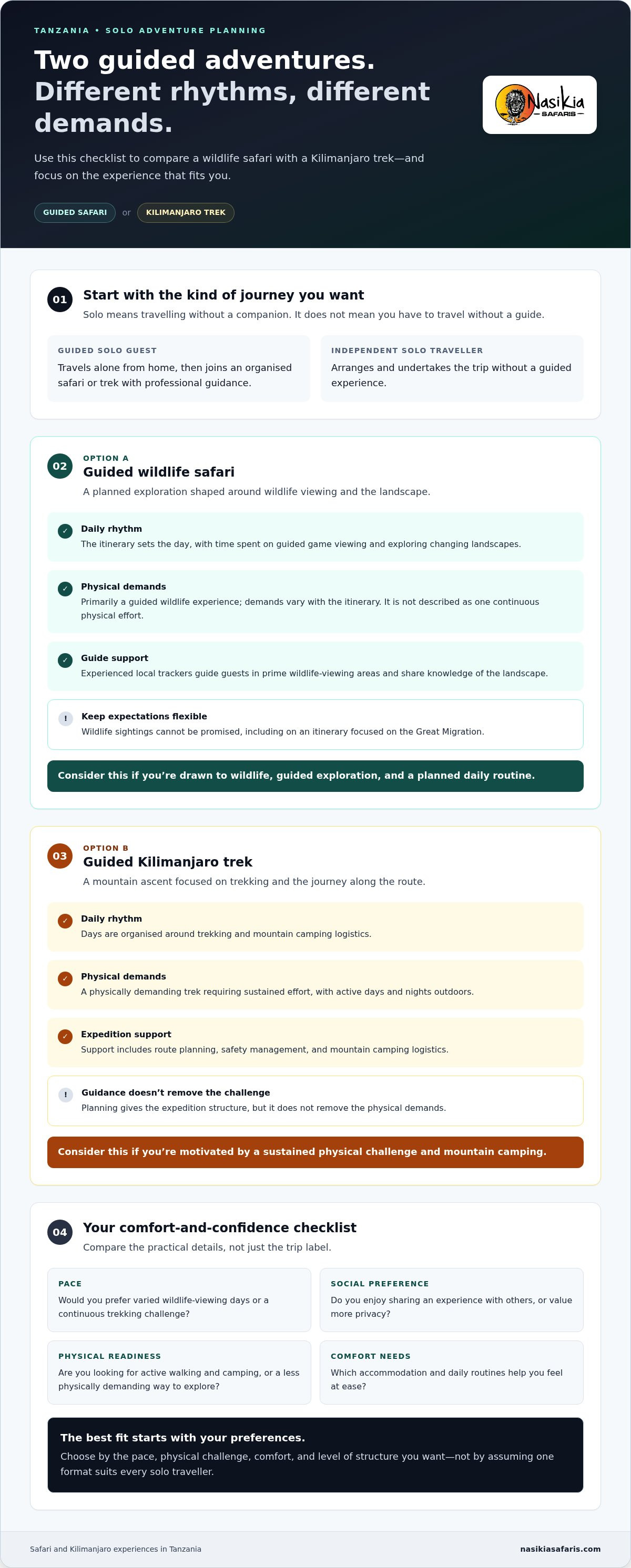
Solo travel means you’re travelling without a companion; it doesn’t mean you have to travel without a guide. An independent solo traveller arranges and undertakes the trip without a guided experience. A guided solo guest travels alone from home but joins an organised safari or trek. You can have a personal solo journey while relying on professional guidance for the adventure itself.
A safari centres on guided wildlife viewing. The itinerary shapes each day, and conditions in the wildlife areas influence what you see and do. Experienced local trackers guide guests in prime viewing areas, sharing their knowledge of the landscape without promising particular sightings. Kilimanjaro trekking is a sustained physical undertaking. Nasikia Safaris’ expeditions include route planning, safety management, and mountain camping logistics. These forms of support serve different needs, so look at what each experience involves rather than assuming every guided trip has the same structure.
Which kind of adventure might suit your travel style?
If you’re drawn to observing wildlife, a safari may suit you. Game viewing offers varied days shaped around guided exploration, rather than one continuous physical effort. Consider whether you’d enjoy spending time in a safari vehicle, taking in changing landscapes, and letting the itinerary set the day’s pace.
If your motivation is a sustained challenge, trekking may feel more rewarding. A Kilimanjaro expedition involves extended physical effort and mountain camping. Think honestly about your readiness for active days and nights outdoors. Guided planning gives the expedition structure, but it doesn’t remove the physical demands.
Before choosing, consider the details that will shape your comfort:
- Pace: Would you prefer varied wildlife-viewing days or a continuous trekking challenge?
- Social preference: Do you enjoy sharing an experience with others, or value more privacy?
- Physical readiness: Are you looking for active walking and camping, or a less physically demanding way to explore?
- Comfort needs: Which accommodation and daily routines help you feel at ease?
The best starting point for adventure travel Tanzania for solo women is not a universal safety ranking. It’s a clear sense of what you want from the journey. Once you know your preferred pace, physical challenge, and level of structure, comparing safari and trekking options becomes more straightforward.
Guided Tanzania Safaris and Kilimanjaro Treks: Understand the Difference
Both experiences bring you into Tanzania’s landscapes, but they ask different things of you. A safari centres on guided wildlife viewing. A Kilimanjaro expedition is a sustained mountain trek that includes camping. Compare the daily rhythm, physical effort, and practical support to find the adventure that suits you. The word “guided” alone doesn’t tell you what the experience will involve.
| Aspect | Guided safari | Kilimanjaro trek |
|---|---|---|
| Experience | Wildlife viewing and landscapes, with the itinerary shaped around the safari experience. | A mountain ascent focused on trekking and the journey along the route. |
| Daily rhythm | Days follow the planned itinerary, with time spent on guided game viewing. | Days are organised around trekking and mountain camping logistics. |
| Physical demands | Primarily a guided wildlife experience; demands vary with the itinerary. | A physically demanding trek requiring sustained effort. |
| Guide support | Experienced local trackers guide guests in prime wildlife-viewing areas. | Support includes route planning, safety management, and mountain camping logistics. |
What can a solo guest expect from a guided safari?
A safari offers a structured way to explore wildlife areas with a guide, rather than requiring you to plan each viewing experience independently. Experienced local trackers bring knowledge of the landscape to the journey, while the itinerary shapes how your time is spent. Wildlife sightings can’t be promised, so focus on the style of experience you want. For example, you might be interested in a Great Migration itinerary, while keeping expectations flexible about specific encounters. This format can suit a solo guest who values guided exploration and a planned daily routine.
What makes a guided Kilimanjaro expedition different?
Kilimanjaro is a mountain challenge, not a safari with a different backdrop. Expect sustained physical effort, a route to follow, and camping as part of the expedition. Nasikia Safaris’ professionally guided climbs include route planning, safety management, and mountain camping logistics, giving the trek practical structure. That support doesn’t remove the demands of the climb. Before selecting an expedition, consider your current fitness, comfort with camping, and readiness for several active days in a mountain environment.
For adventure travel Tanzania for solo women, the useful comparison is how each format fits your interests and needs, not which one is universally safer. A guided safari and a guided trek involve different settings, routines, and demands. Review the Government of Canada’s travel advice for Tanzania for current safety and health guidance as part of your wider preparation. You can also explore Nasikia Safaris’ guided safari and Kilimanjaro experiences to compare these two distinct ways to discover the country.
How to Compare Tanzania Adventures for Your Comfort and Confidence
No adventure format is automatically right or safest for every solo traveller. Your confidence is more likely to grow when the itinerary’s structure, guide involvement, physical demands, and comfort level align with what you want from the journey. Use the comparisons below as a starting point, then weigh them against your own priorities.
The right Tanzania adventure depends on the pace you enjoy, the experiences that interest you, and the level of support you want along the way.
| Option | Potential advantages | Considerations |
|---|---|---|
| Guided safari | Organised wildlife viewing, with a guide and local trackers contributing knowledge of the landscape. | Days follow an itinerary, and game viewing involves time in the safari vehicle and changing conditions outdoors. |
| Kilimanjaro trek | A purposeful mountain challenge with route planning, safety management, and camping logistics included in Nasikia Safaris’ expeditions. | Requires sustained physical effort and comfort with mountain camping. |
| Safari and trek | Combines wildlife exploration with a mountain challenge for travellers who want both experiences. | A combined itinerary can mean more transitions and a broader range of physical and comfort demands; the design needs to suit your priorities. |
How much structure and social connection would you enjoy?
A planned itinerary gives each day a clear shape and reduces the coordination you handle yourself. An independent approach may leave more room to make decisions as you go, but also asks you to manage more details. A guided experience may create opportunities to share moments with other guests, though you shouldn’t assume a particular group composition or companion arrangement. Consider whether you’d welcome conversation along the way or prefer more personal space.
On safari, you might value the structure of guided wildlife viewing. A trek is organised around the mountain route and its associated routines. If parks and conservation are part of your decision, the Tanzania National Parks Authority (TANAPA) provides official information about national parks. Use that context to clarify what you most want to experience, rather than choosing an itinerary solely because it sounds adventurous.
How should you weigh comfort, challenge, and personal boundaries?
Safari routines and mountain camping call for different adjustments. Picture an ordinary day, not only its most memorable highlight: how much time do you want outdoors, what level of physical effort feels reasonable, and what accommodation conditions help you rest well? If camping is part of the appeal, trekking may suit you. If it feels like a compromise, give that preference weight.
As you compare options for adventure travel Tanzania for solo women, write down personal needs or questions about privacy, pace, and daily routines. Use that list to assess whether an itinerary feels comfortable and realistic, without assuming every trip offers the same arrangements. If guided wildlife viewing or a supported Kilimanjaro challenge matches your priorities, explore Nasikia Safaris’ guided Tanzania adventures.
Plan a Solo Women’s Adventure in Tanzania: Practical Steps Before You Go
A considered plan lets you look forward to the open plains or mountain trails while keeping practical needs in view. For adventure travel Tanzania for solo women, start with the experience you want, work through the details that will help you feel prepared, then review current official guidance close to departure. Requirements and advice can change, so use authoritative sources rather than old posts or assumptions.
Use this sequence to organise your decisions:
- Choose your adventure. Decide whether guided wildlife viewing, a Kilimanjaro expedition, or a combination best matches your interests and physical readiness.
- Set your priorities. Note your preferred pace, comfort needs, privacy preferences, and any personal considerations that may affect the itinerary.
- Shape the experience. For a safari, clarify the wildlife and landscapes that interest you. For a trek, review the physical demands and what mountain camping involves.
- Review current requirements. Check official Tanzanian entry and health information, along with your government’s travel advice, close to departure.
- Prepare your essentials. Organise travel documents and personal items suited to your chosen itinerary and the conditions you expect.
What should you prepare before a guided safari?
Before shaping a safari itinerary, make a short list of the wildlife experiences you hope to enjoy, the pace that feels comfortable, and the accommodation or daily routine details that matter to you. Include relevant personal needs from the start, rather than leaving them as an afterthought. If a Great Migration itinerary appeals, treat timing as a separate planning decision. An itinerary can focus on the migration, but wildlife movements and sightings can’t be guaranteed.
Review current official travel, entry, and health guidance for Tanzania, and prepare personal essentials for your journey. This might include documents and items you rely on for comfort or health, selected for your own needs. Keep expectations flexible: the itinerary is shaped around the safari experience, while conditions in wildlife areas can change what each day brings.
What should you prepare before a Kilimanjaro expedition?
Give honest attention to the trek’s physical demands before choosing an expedition. Consider your present fitness, how you respond to sustained activity, and whether mountain camping suits your comfort needs. Prepare in a way that reflects the demands of the climb and your personal circumstances, rather than relying on a one-size-fits-all training timeline. Review current official travel and health guidance for destination-specific information before departure.
Guided Kilimanjaro expeditions include route planning, safety management, and mountain camping logistics. This gives the journey practical structure while leaving the physical challenge yours to undertake. As you plan, keep a written record of questions about your personal needs, comfort, and preparation. For a guided safari or Kilimanjaro expedition shaped around your interests, explore Tanzania adventures with Nasikia Safaris.
Choose a Guided Tanzania Adventure with Nasikia Safaris
Once you’ve weighed the pace, physical demands, and support you want, match those priorities to an experience. Nasikia Safaris is a licensed Tanzanian tour operator offering guided wildlife safaris and professionally guided Kilimanjaro expeditions. For solo travellers, both options provide a planned adventure with professional guidance, but each offers a distinct way to discover Tanzania.
Guided travel gives the experience a clear framework, from wildlife viewing with local expertise to an expedition organised around a mountain route. It doesn’t mean every personal preference is automatically addressed. A guide can’t guarantee wildlife sightings or remove the physical challenge of trekking. Knowing what each experience involves helps you choose with confidence.
Explore guided wildlife safaris shaped around your interests
A guided safari suits travellers who value organised wildlife experiences and knowledgeable support while exploring prime wildlife-viewing areas. Experienced local trackers guide guests and bring their understanding of the landscape to the experience, while the itinerary shapes how your time is spent. Wildlife is unpredictable, so the value lies in guided exploration, not a promise of seeing a particular animal.
Great Migration itineraries offer a wildlife-focused option. As you consider a safari, think about the experiences you want from your days and the pace you’d enjoy. These preferences can help you compare itineraries and decide which kind of guided game viewing feels right for your adventure travel Tanzania for solo women.
If an organised wildlife experience aligns with your interests, Explore guided Tanzania safaris and consider the safari style that best suits your travel priorities.
Consider a professionally guided Kilimanjaro expedition
A Kilimanjaro expedition is a trekking challenge, not a wildlife safari. The focus is on the mountain journey and its sustained physical effort. Nasikia Safaris’ guided expeditions include route planning, safety management, and mountain camping logistics, providing practical structure for the climb. That support helps organise the expedition, but it doesn’t replace your own preparation or make the trek physically effortless.
Before choosing, reflect on whether trekking and camping match your fitness, interests, and comfort needs. If wildlife viewing is your priority, a safari may feel more natural. If you’re drawn to a demanding mountain journey, a guided expedition may be a better match. Both are guided ways to explore, but they call for different kinds of readiness.
Let your interests and preferred pace lead the decision. When you’re ready to explore the options, Discover guided Tanzania adventures with Nasikia Safaris.
Take the First Step Toward Your Tanzania Adventure
Your next step doesn’t need to be a complete itinerary. Start with one clear question: what would make this journey meaningful to you? It might be the anticipation of a wildlife sighting, the satisfaction of taking on a mountain challenge, or a thoughtfully planned experience that lets you focus on the landscape around you. Naming that priority can turn the idea of adventure travel Tanzania for solo women into a trip that feels personal and achievable.
Plan at a pace that feels comfortable. Keep your preferred rhythm, comfort needs, and questions close as you explore your options, and let them guide your decisions. A solo journey can be both a bold step and a well-considered one.
When you’re ready to choose your experience, Explore guided Tanzania safaris and trekking adventures with Nasikia Safaris.
Frequently Asked Questions
Is Tanzania suitable for a first solo trip as a woman?
It can be a rewarding first solo destination if you choose an itinerary that matches your experience and comfort, but no destination is risk-free. A guided trip can reduce the number of arrangements you manage independently, while careful preparation still matters. For adventure travel Tanzania for solo women, review current travel advice, plan how you’ll move between activities, and decide how much structure will help you feel at ease.
Can I join a guided safari in Tanzania if I am travelling alone?
Yes, you can travel without a personal companion and take part in a guided safari experience. Travelling solo describes your own travel party, not whether the activity has a guide. Itinerary details and arrangements can differ, so read the information for the safari you’re considering, including its daily plan and accommodation details. A guided wildlife experience offers a planned way to explore, but it can’t guarantee particular sightings or who else will be travelling.
How can I compare a guided safari with a Kilimanjaro trek?
Compare the ordinary demands of each trip, not only its most exciting moments. A safari centres on wildlife viewing and time following an itinerary. A Kilimanjaro expedition calls for sustained physical effort and nights associated with mountain camping. Consider how you prefer to spend a full day, how you feel about active travel, and what rest conditions suit you. Those practical details often clarify which experience you’ll enjoy more.
What should a solo woman consider when choosing safari accommodation?
Think about the setting and routine that help you rest comfortably, then read the accommodation details alongside the itinerary. Consider privacy, sleeping arrangements, facilities, and how the property fits into the day’s plan. If you have personal requirements, write them down early so they’re part of your planning. Don’t assume that travelling alone automatically means a particular room arrangement. Use the itinerary details to understand what is planned.
Do I need to be highly experienced to join a guided Kilimanjaro expedition?
Prior mountaineering experience isn’t the only measure of readiness, but a guided expedition is still a demanding physical undertaking. Consider your current fitness, health, and comfort with sustained activity and camping, and prepare in a way that suits your circumstances. Route planning and expedition support provide structure, not a substitute for personal preparation. If you have health concerns, seek advice from a qualified health professional before making plans for a high-altitude trek.
Can I combine a Tanzania safari with a Kilimanjaro expedition?
Combining both can create a varied trip, pairing wildlife viewing with a mountain challenge, but it takes thoughtful itinerary planning. Allow for the different physical demands and routines, and consider whether you’d want time to rest between the trek and safari rather than moving straight from one into the other. The sequence, total trip length, and transition arrangements will shape how manageable the combination feels for you.
What should I check in current travel advice before visiting Tanzania?
Review your government’s latest Tanzania advisory for safety updates, areas of concern, local guidance, and emergency information. Check official Tanzanian sources for entry requirements, and consult a qualified health professional or authoritative health guidance for destination-specific precautions. Revisit these sources close to departure because advice and requirements can change. Keep copies of important documents accessible, and make sure your plans reflect the latest guidance rather than information saved from an earlier trip.


