
The best Kilimanjaro climb isn’t necessarily the shortest or most celebrated. It’s the one whose route, pace, and support fit your priorities. Kilimanjaro climbing expeditions vary in itinerary and in how they approach acclimatisation, so it helps to compare the actual plans before choosing.
Choosing a guided climb involves more than comparing route names. Consider how the itinerary’s pace allows for adjustment to altitude, what kind of mountain experience you want, and how professional guidance and practical support shape each day. This guide explains the role of route planning, safety management, a coordinated support team, and camping logistics. Use these factors to weigh your goals, available time, and preferred level of comfort, then choose an expedition that feels right for you.
Key Takeaways
- Compare expedition options by route character, daily pace, scenery, and overnight style rather than by route name alone.
- Consider how itinerary length and ascent pace relate to acclimatisation and the demands of a multi-day trek.
- Use your goals, available time, fitness, and comfort with camping to narrow down the journey that suits you.
- Understand how professional guides, route planning, safety management, and coordinated mountain logistics support a guided climb.
- See how Nasikia’s Kilimanjaro climbing expeditions bring planning and practical mountain support together.
Kilimanjaro Climbing Expeditions: What the Journey Involves
A Kilimanjaro expedition is a multi-day trek with a clear destination: Uhuru Peak, the highest point on Mount Kilimanjaro. The experience includes more than the summit attempt. Each day takes you through changing mountain environments, terrain, temperatures, and views. Reaching the top is a goal, not a guaranteed outcome, so approach the climb as a demanding trek that calls for preparation, patience, and respect for altitude.
What makes Kilimanjaro a distinctive trekking expedition?
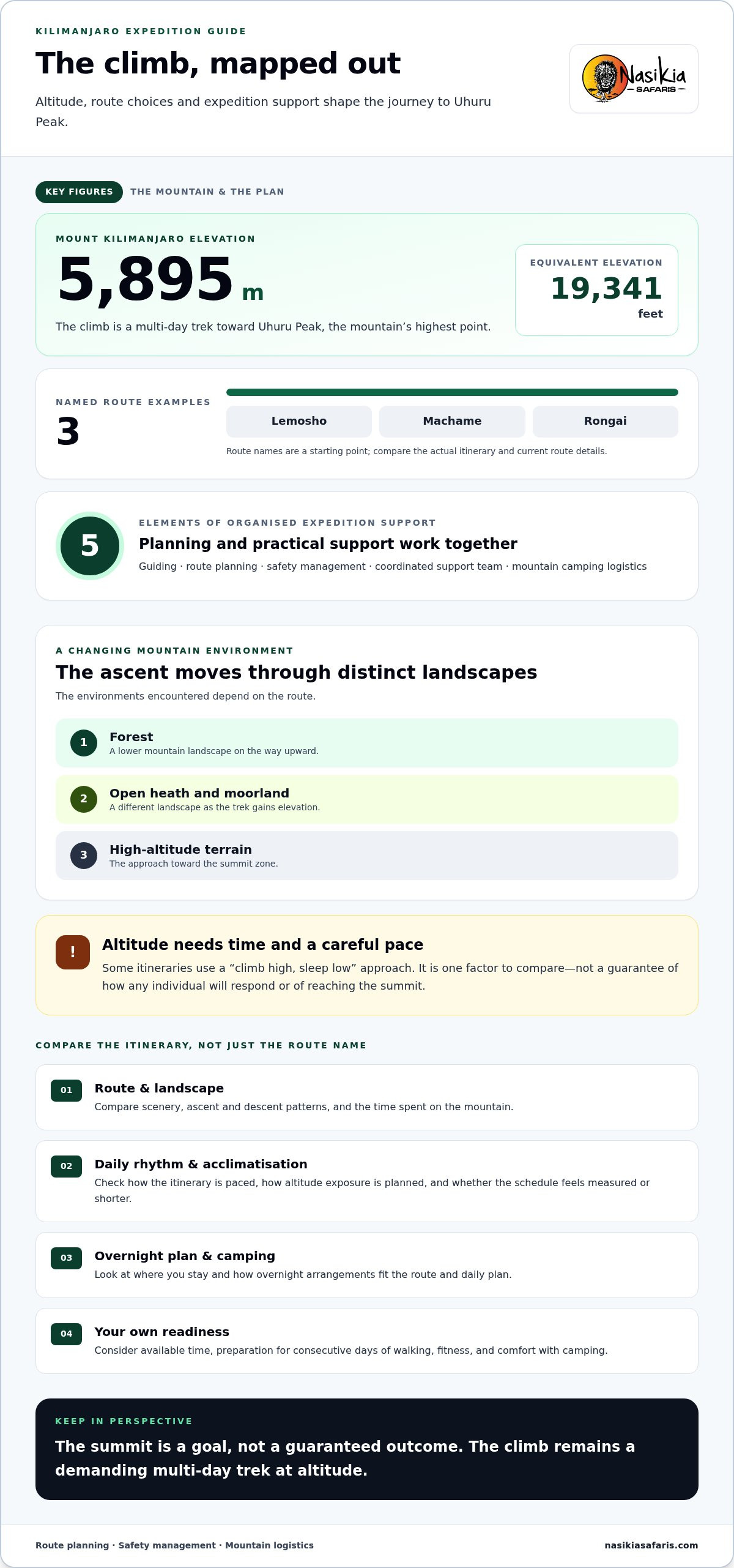
Rising to 5,895 metres (19,341 feet), Kilimanjaro stands out for its elevation and the progression of landscapes along the ascent. Depending on the route, trekkers move through forest, open heath and moorland, and high-altitude terrain before approaching the summit zone. The mountain’s geography, routes, and history are outlined in the Mount Kilimanjaro Wikipedia entry.
The changing surroundings make the climb feel like a journey across several worlds, while the high-altitude setting makes it physically demanding. Daily trekking, overnight stays, and gradual ascent are all part of the experience. The central challenge is sustained walking at altitude, where preparation and a careful pace matter. The summit attempt is one part of the expedition, not a promise that you will reach the peak.
What does a guided expedition generally organise?
A guided Kilimanjaro expedition is a planned, multi-day trek led by professional guides, with route planning and organised mountain logistics supporting the journey toward the summit.
That planning brings together the practical elements needed to support the trek: professional guiding, safety management, a coordinated support team, and mountain camping logistics. These elements work together throughout the itinerary, from the day’s walking plan to overnight arrangements. Nasikia Safaris organises guided Kilimanjaro climbing expeditions with route planning, safety management, a full support team, and mountain camping logistics.
Routes and itineraries vary in landscape, daily rhythm, and overnight arrangements. Compare the specific plan rather than assuming a particular schedule or amenity is standard on every climb. Claims about summit success or comfort also depend on the individual plan and circumstances. Look at what the itinerary covers, how it is paced, and how its logistics fit the trek instead of relying on a headline promise.
Preparation matters before departure, too. Build your readiness for consecutive days of walking, and think honestly about how you manage physical effort and changing conditions. A guided expedition provides structure and professional oversight, but the climb remains a strenuous mountain trek. Understanding that balance helps you assess the route and pace that suit you.
Inside a Kilimanjaro Expedition: Route Planning, Pace, and Support
A well-planned climb is more than a line on a map. The route and itinerary shape the landscapes you pass through, the feel of each trekking day, where you spend the night, and how gradually you gain altitude. Comparing these details gives you a clearer picture of the experience than a route name or headline claim alone.
How route and itinerary planning shape the climb
Routes differ in scenery, ascent and descent patterns, daily rhythm, and time spent on the mountain. One itinerary may emphasise a particular landscape or approach, while another may allow more time for a measured pace. To compare them, consider how much time you have, how you feel about consecutive days of walking, and whether you value a steadier schedule over a shorter one.
Lemosho, Machame, and Rongai are route names you may encounter when researching Kilimanjaro treks. Their differences show why it’s useful to compare the details of an itinerary, not just its name. Route details and park guidance can change, so use current information when assessing a plan. Kilimanjaro National Park’s conservation context is part of the journey too, as described by the UNESCO World Heritage Site Kilimanjaro.
Why acclimatisation and organised support matter
Altitude adds a consideration that ordinary hiking plans may not: your body needs time to adjust as you climb. Expedition itineraries account for the pace and pattern of altitude exposure. Some plans use a “climb high, sleep low” approach, trekking higher during the day before descending to a lower sleeping elevation. This is one factor to consider when comparing itineraries, but no schedule can guarantee how an individual will respond.
Professional guides and safety management provide structure throughout the expedition, while a coordinated support team helps keep the trek and its mountain logistics organised. Nasikia’s guided expeditions include a full support team and safety management.
Camping is part of the itinerary, not a detail to leave until you reach the trail. Overnight arrangements need to fit the route and daily plan, and mountain camping logistics help coordinate the transition from each day’s walk to the next. Consider these details alongside scenery and pace when deciding what kind of multi-day climb suits you.
When comparing Kilimanjaro climbing expeditions, focus on how the route, altitude profile, overnight plan, and support fit together. Nasikia’s guided Kilimanjaro expeditions combine route planning, safety management, a full support team, and camping logistics in a planned climb.
Compare Kilimanjaro Climbing Expeditions by Route and Travel Style
Route names are a useful starting point, but they don’t tell the whole story. To compare Kilimanjaro climbing expeditions, look at the actual itinerary: how it climbs and descends, which landscapes it crosses, how the days are paced, and where you stay overnight. The examples below describe broad route characteristics. Exact itineraries and current route details can vary.
Which route characteristics should you compare?
Consider how the scenery changes as a route ascends, whether the planned descent follows the same path, and how much time the schedule allows on the mountain. These details affect both the character of the journey and its daily rhythm. A route name alone can’t tell you whether a specific itinerary matches your priorities.
| Illustrative route name | Broad route character | What to compare in the itinerary | Overnight style and priorities |
|---|---|---|---|
| Lemosho | Commonly described as approaching from the west. | Check the ascent and descent pattern, daily pace, and time allowed for altitude adjustment. | Review the planned overnight arrangements and whether the itinerary’s pace suits your available time. |
| Machame | Commonly described as a southern approach, with route plans that can traverse varied terrain. | Compare the day-to-day walking pattern, scenery, and whether the descent retraces the ascent. | Check how camping logistics fit into the schedule and your comfort with a multi-day trek. |
| Rongai | Commonly described as approaching from the north. | Look closely at the specific itinerary’s ascent profile, daily distances, and overall rhythm. | Consider the overnight plan alongside the route’s character and the time you want to spend on the mountain. |
These descriptions are starting points, not rankings. Avoid labelling a route easiest, safest, or most successful without reliable, current evidence. Compare the day-by-day plan with your trekking preferences, available time, and approach to altitude.
How expedition formats can match different priorities
A summit-focused trip makes the climb the central part of your Tanzania travel plans. If you have more time and want a broader holiday, you can plan other experiences before or after the trek. Treat these as separate parts of your travel planning, with enough time between them for travel, rest, and the physical demands of the mountain.
Group pace, time on the mountain, and comfort with camping also shape your decision. Consider whether you prefer a steady trekking rhythm, how you feel about consecutive walking days, and what kind of overnight experience feels manageable. Then compare those priorities with the planned route and itinerary rather than assuming a familiar name guarantees a particular experience.
Nasikia’s guided climbing expeditions bring route planning, safety management, a support team, and camping logistics into the expedition plan. Explore Nasikia’s guided climbing expeditions as you refine your priorities and plan your Kilimanjaro journey.
Choose a Kilimanjaro Expedition That Fits Your Goals
The right expedition matches the experience you want with the time and effort you can commit. Before comparing itinerary details, consider your summit goal, comfort with several days of trekking, and whether you want the climb to be the focus of your Tanzania trip. A clear sense of your priorities makes route and support choices easier to assess.
A practical checklist for comparing expedition options
Work through these decisions in order to make sure your choice reflects both your aspirations and the practical shape of the journey.
- Define the experience you want. Is reaching Uhuru Peak your central goal, or are you equally drawn to the changing landscapes and experience of travelling on foot? Consider how much time you can give the climb and how you feel about consecutive days of walking. Your fitness and comfort with a demanding trek help set realistic expectations, though neither predicts exactly how you’ll respond to altitude.
- Compare the itinerary, not just the route label. Look at the planned daily pace, ascent and descent pattern, time on the mountain, and how the schedule approaches gradual altitude exposure. Then consider the route’s broad character and scenery. A familiar route name doesn’t tell you whether a particular itinerary suits your available time or preferences.
- Assess the support and overnight plan. Think about your expectations for professional guiding, safety management, group rhythm, and mountain camping. Review these together: overnight arrangements are part of the multi-day plan, while the support structure helps organise the expedition around its route and pace. Preparation for sustained walking remains important whichever itinerary you choose.
Questions to resolve before committing to a climb
Use these practical questions to check whether a proposed plan matches your priorities:
- Does the route and itinerary reflect the scenery, pace, and amount of time on the mountain you want?
- Does the schedule take a gradual approach to altitude rather than simply aiming to move quickly?
- Are the guiding arrangements, safety management, support team, and camping logistics clear as parts of one expedition plan?
- Does the expected group rhythm feel compatible with your trekking experience and comfort with multi-day walking?
There isn’t one ideal itinerary for every climber. A thoughtful choice balances your available time with the route’s character, the demands of the trek, and the support arrangements that shape each day. Nasikia’s guided expeditions bring route planning, safety management, a full support team, and mountain camping logistics into the climb. Explore Nasikia’s guided Kilimanjaro expeditions as you consider which plan fits your goals.
Plan Your Guided Kilimanjaro Climbing Expedition with Nasikia
Choosing an expedition means finding a thoughtful match between your ambition and how you want to experience the mountain. Nasikia Safaris is a licensed Tanzanian tour operator that organises professionally guided Kilimanjaro climbing expeditions. Its plans bring together professional guides, route planning, safety management, a full support team, and mountain camping logistics, so you can consider the climb as one coordinated journey rather than a collection of separate details.
What Nasikia brings to a guided mountain expedition
Route planning shapes the expedition itinerary and its daily progression, while professional guides lead the trek. Safety management is part of the plan throughout. These arrangements support an organised approach to the mountain, without promising how any individual will respond to altitude or whether they will reach the summit.
A full support team and planned camping logistics help coordinate the practical rhythm of a multi-day climb, from the transition between a day on the trail and an overnight stop to the next stage of the itinerary. Each day connects to the one before it. A considered plan makes it clearer how the route, pace, and overnight arrangements fit together.
Take the next step toward your Kilimanjaro climb
As you prepare to choose, keep your priorities in view. Consider the route character you want, the pace and time on the mountain that suit your plans, the support arrangements you value, and your goal for the journey. Your comfort with sustained trekking and camping also matters. Together, these points help turn a broad ambition into an informed expedition choice.
Before setting out, understand the proposed itinerary as a whole: how it reflects your preferences, how guiding and safety management fit into the plan, and how camping logistics support the days on the mountain. Preparation is part of the experience, and realistic expectations help you approach the climb with care and purpose.
Nasikia’s guided expeditions bring these planning and support elements together for your Kilimanjaro journey. Explore Nasikia’s guided Kilimanjaro climbing expeditions and take a considered next step toward the mountain, with your goals and preferred style of trek at the heart of the plan.
Let Your Kilimanjaro Ambition Take Shape
Turn the idea of climbing the mountain into a plan that reflects how you want to travel. Consider what you hope to take away from the experience, how much time you can devote to the climb, and what pace feels realistic. Your answers can guide decisions about route, itinerary, and the support that will help you approach each day with confidence.
Kilimanjaro climbing expeditions call for preparation and a willingness to take the journey one step at a time. With a considered plan, anticipation becomes part of the adventure: the changing landscape, the quiet rhythm of the trail, and the summit goal ahead, balanced with an understanding of the demands of trekking at altitude.
Nasikia Safaris is a licensed Tanzanian tour operator, and its guided expeditions bring planning and mountain support together for the climb. Explore Nasikia’s guided Kilimanjaro climbing expeditions and take a thoughtful next step toward your journey. Your mountain adventure can begin with a plan that reflects your goals.
Frequently Asked Questions
What is the best time of year to climb Mount Kilimanjaro?
The main dry seasons for climbing are June to October and January to March, which generally offer more favourable trekking conditions. Weather on the mountain can still vary, so a dry-season departure doesn’t mean every day will be clear or comfortable. When choosing dates, consider how much time you can set aside and whether you’re prepared for changing conditions across the mountain’s different elevations.
Can you climb Kilimanjaro without technical mountaineering experience?
Yes, technical mountaineering experience is generally not required for the standard trekking ascent, but the climb is physically demanding and reaches high altitude. Expect sustained walking over multiple days rather than a technical climb involving specialised climbing skills. Prepare with regular walking and endurance activity, and discuss your health and readiness with a medical professional before travelling. A guided expedition provides professional oversight, but it can’t guarantee how your body will respond to altitude.
Is Kilimanjaro suitable for first-time trekkers?
It can suit a first-time trekker who understands the challenge and prepares carefully. You don’t need a long mountaineering résumé, but being comfortable with extended walking days and consecutive days of activity can help. Before choosing an itinerary, consider your current fitness, experience on uneven terrain, and comfort with basic mountain camping. If you have health concerns, seek medical advice before committing to a high-altitude trek.
What is the highest point reached on a Kilimanjaro expedition?
The highest point is Uhuru Peak, at 5,895 metres (19,341 feet) above sea level. It stands on the summit of Mount Kilimanjaro and is the objective of the summit attempt. Reaching this elevation is demanding, and not every climber will reach the peak. Even without a summit, the experience includes a substantial journey through the mountain’s changing elevations and environments.
Do you need a permit to climb Mount Kilimanjaro?
Yes, climbing takes place within Kilimanjaro National Park, so the required park access arrangements must be in place. Climbers must book through a licensed tour operator and climb with a licensed guide; independent unguided climbs aren’t permitted. A licensed operator can organise the expedition’s park arrangements as part of the trek plan. Confirm the current requirements for your itinerary before travel, since park rules and fees may change.
Can a Kilimanjaro climb be combined with a Tanzania safari?
Yes, you can plan a safari before or after your climb as part of a wider Tanzania holiday. Treat the safari and trek as distinct parts of your itinerary, allowing time between them for travel, rest, and the physical demands of the mountain. Nasikia Safaris offers guided Kilimanjaro expeditions and Tanzania safari experiences. Explore Nasikia’s guided experiences as you plan your Tanzania trip.


